Scientific news

COP29: the never-ending climate emergency

COP 29 opens on 11 November in Baku, Azerbaijan, against the backdrop of accelerating global warming and its effects. On the agenda, a key issue: climate finance.

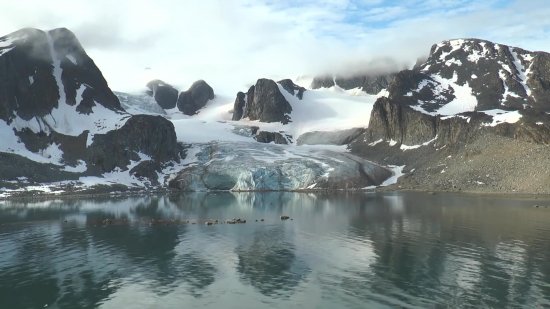
As a result of global warming in Greenland, freshwater from rivers fed by melting snow and glaciers, rich in alluvial deposits, gives the coastline a brown tint as it flows into the sea, masking the clarity of the water.

© Erwan Amice / LEMAR / CNRS Images

View the media
The 29th Conference of the Parties to the United Nations Framework Convention on Climate Change, or COP 29, is taking place in Baku, Azerbaijan, from 11 to 22 November 2024. While the number of participants has risen considerably so have the stakes: the latest IPCC reports are more alarmist than ever, and governments will have to work twice as hard to meet the targets set by the Paris Agreement in 2015 by limiting the rise in temperature to 1.5°C by the end of the century.

It's a tall order, especially as all the signs are that global warming is accelerating, with terrible consequences around the world as early as 2030. Among the key priorities of COP 29 are securing a new goal on climate finance, ensuring every country has the means to take much stronger climate action, slashing greenhouse gas emissions and building resilient communities. Be that as it may, one thing is clear: there is an urgent need for action, and the scientific community is obviously at the forefront of this battle.

Scientists are not waiting for the annual COP deadline to work to better understand and counter global warming. Discover a selection of reports on the consequences of global warming, and the initiatives taken by scientists to combat it.

Open media modal

Only available for non-commercial distribution

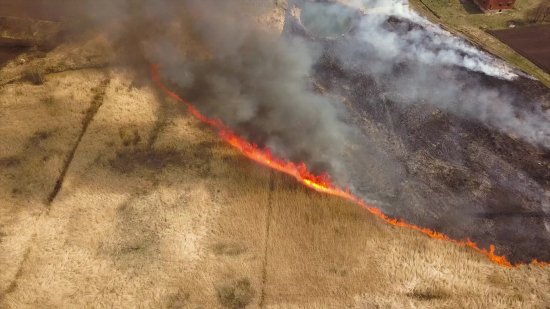
Incendies : des chercheurs aux avant-postes

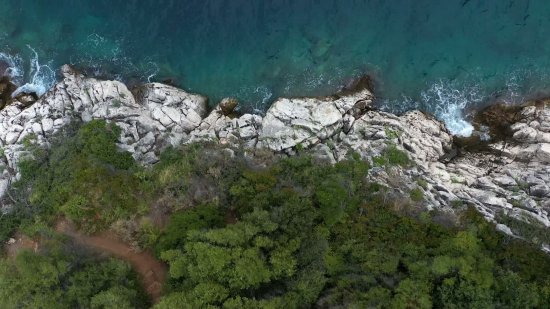
Certains incendies, comme ceux qui se sont déclarés dans la province de l'Alberta au Canada depuis mai 2023, semblent incontrôlables. Comment anticiper un phénomène aussi variable et imprévisible ? Ce reportage vous emmène en Corse, où des expériences de terrain et des simulations permettent aux scientifiques de mieux comprendre la dynamique des feux de forêt.

Video
7714
Incendies : des chercheurs aux avant-postes
Open media modal

For any commercial distribution contact the executive producer

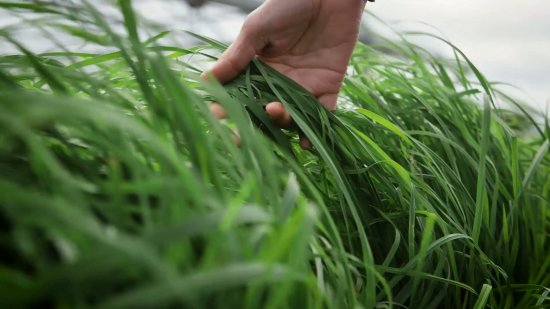
Drought: the future is in the meadows

In this third episode, we find out how to simulate the climate of 2050 and how droughts will be more frequent and last longer. In Lusignan, near Poitiers, agronomy researchers have designed a high-tech mobile greenhouse with drone tracking and 3D images. This may be where the future varieties of European grasslands will germinate...

Video
7385
Drought: the future is in the meadows
Open media modal

For any commercial distribution contact the executive producer

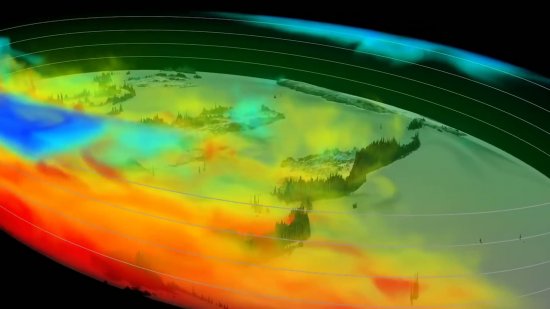
Modelling: climate in equations

This fourth episode is devoted to the sets of equations that represent the physical mechanisms that affect our planet, such as the circulation of water and carbon. How are these models developed? What are they used for? Meet the scientists who are sounding the alarm with the help of these models.

Video
7384
Modelling: climate in equations
Open media modal

For any commercial distribution contact the executive producer

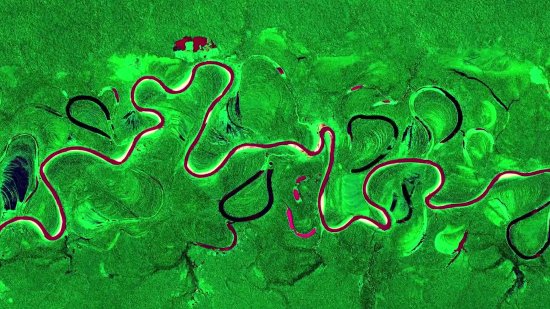
Amazon: The lungs are suffocating

This sixth episode traces the current development of the Amazon's climate through the involvement of local inhabitants and the analysis of satellite images. The findings are clear, there is more drought in the south, more humidity in the north. With cascading consequences for the global climate...

Video
7365
Amazon: The lungs are suffocating
Open media modal

Only available for non-commercial distribution

Médaille d'Argent 2019 : Valérie Masson-Delmotte, chercheuse en climatologie

Portrait de Valérie Masson-Delmotte, lauréate de la médaille d'argent 2019 du CNRS. Climatologue au Laboratoire des sciences du climat et de l'environnement (DR04), spécialisée dans l'étude des variations climatiques passées, la compréhension du cycle de l'eau et l'évaluation des modèles de climat.

Video
6795
Médaille d'Argent 2019 : Valérie Masson-Delmotte, chercheuse en climatologie
Open media modal

Only available for non-commercial distribution

SURe

SURe est une plateforme cloud prédisant les îlots de chaleur et la sévérité de la COVID-19 à l'échelle du coin de la rue. Construit à partir de modèles théoriques validés sur de nombreuses villes, SURe révolutionne la façon d'accéder aux données environnementales à l'échelle du quartier sans réseaux de capteurs. SURe fournit des prévisions en temps réel, qui varient en fonction de la localisation, de la saisonnalité, de la densité de la population locale et de la texture de la ville.

Video
7425
SURe
Open media modal

Only available for non-commercial distribution

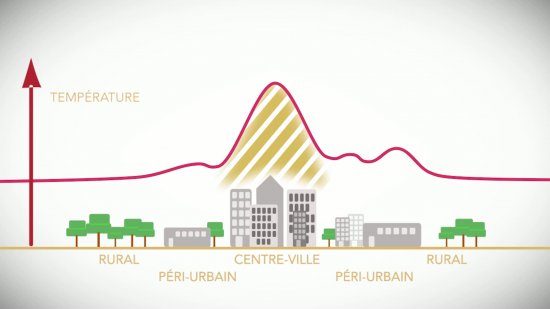
Ilots de chaleur : quel climat pour demain ?

Cet été, les rues de Paris se transforment en laboratoire pour comprendre et limiter un phénomène redouté par les citadins : l'îlot de chaleur, causé par des matériaux qui emmagasinent l'énergie du soleil la journée et la restituent pendant la nuit. Découvrez les recherches menées dans le cadre du projet "Paname 2022" sur la qualité de l'air et le climat urbain.

Video
7482
Ilots de chaleur : quel climat pour demain ?
Open media modal

Only available for non-commercial distribution

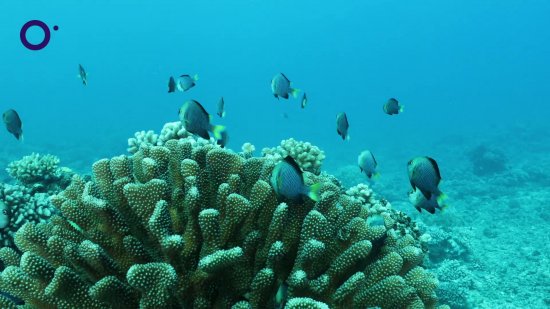
TARA at the Bedside of Coral

Due to global warming and ocean acidification, coral reefs are now an endangered ecosystem. Aboard research shooner Tara, scientists embarked the Tara Pacific expedition in 2016, whose goal is to diagnose the health condition of corals. They aim at creating the most complete database about corals to date. To that end, they use visual analysis, samples, and a new cartography tool for ocean floors, the Hyperdriver. Divers soon noticed the high mortality rate of the reefs, with most corals losing…

Video
6519
TARA at the Bedside of Coral
Open media modal

Only available for non-commercial distribution

Au coeur des dépressions arctiques

L'Arctique est une région qui se réchauffe quatre fois plus vite que le reste du globe. Des phénomènes météorologiques locaux pourraient en partie expliquer cette accélération : les dépressions arctiques. Des scientifiques français sont partis au Svalbard pour étudier plus précisément leur impact sur les températures locales.

Video
7576
Au coeur des dépressions arctiques
Open media modal

For any commercial distribution contact the executive producer

Peatlands: Carbon traps

In this fifth episode, we discover the importance of wetlands. They cover only 3% of the world's surface but capture a third of the carbon trapped in the soil. How do they react to changing temperatures? To find out, researchers have installed a range of instruments at a site near Counozouls in the Pyrenees.

Video
7366
Peatlands: Carbon traps
Open media modal

For any commercial distribution contact the executive producer

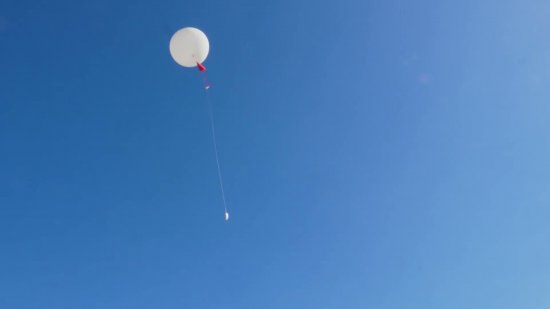
Greenhouse gases: balloons in the sky

Discover the studies behind the statistics of 6th IPCC report and the research work of scientists who aim to gain a better understanding of climate change and its impact. This first episode presents the work carried out by members of the LSCE (Laboratoire des sciences du climat et de l'environnement) at the Traînou site in France. These scientists collect air samples using stratospheric balloons that reach altitudes of over 30 km. The analysis results of these samples are then used…

Video
7347
Greenhouse gases: balloons in the sky
Open media modal

For any commercial distribution contact the executive producer

Glaciers, the climate sentinels

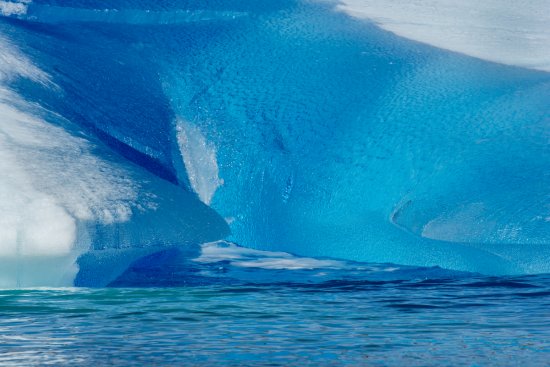
This second episode looks at the work of scientists at the Grenoble Institute of Geosciences who are studying the climate change effect on glacier behaviour. In mountainous and polar regions, glaciologists such as Fanny Brun measure the melting glaciers and collect ice samples, sometimes under extreme conditions, as evidence of climate change over time. Laboratory analyses are used to understand the climate change effect on glacier behaviour. Gerhard Krinner, a…

Video
7346
Glaciers, the climate sentinels
Open media modal
OneOceanScience

Faced with global warming, coral reefs are on the front line. As global temperatures rise, the coral bleaches and dies. This decline has an impact on its entire ecosystem. Coral reef researchers Serge Planes and Laetitia Hédouin explain why research at CRIOBE is crucial to saving the coral. This video was produced as part of the OneOceanScience campaign organised by Ifremer, CNRS and IRD. Scientists from 33 countries take part in this digital world tour and explain in a series of short…

Video
7349
OneOceanScience
Open media modal
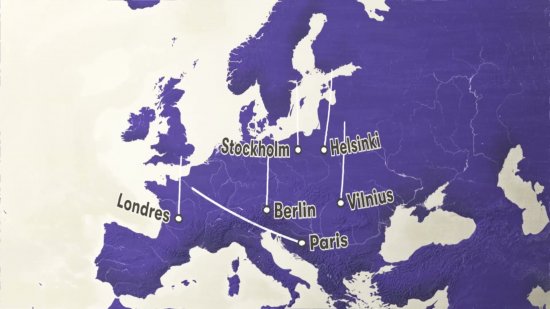
What will the climate be like in Europe in 2050?

The scale and speed of the change in climate we are facing today is unprecedented. Heat waves, droughts, floods? We are already experiencing the effects on a daily basis. The effects will increase until at least 2050 and all European regions will be affected. Based on the results of the latest available studies, and in particular on the 6th IPCC report, this animated film produced by scientists in the framework of the European project EUCP presents the changes in Europe's climate expected in…

Video
7348
What will the climate be like in Europe in 2050?
Open media modal
Océans : élévation et réchauffement

Pendant longtemps, les discussions sur le changement climatique n ' ont pas pris l ' océan en compte. Quel rôle l ' océan joue-t-il dans le climat et quels sont les impacts du changement climatique sur l ' océan? Trois chercheurs, Sabrina Speich, Gilles Reverdin et Benoît Meyssignac, reviennent sur deux problématiques, le réchauffement et l'élévation du niveau des océans. Les mesures effectuées par des marégraphes, puis des satellites ont démontré que le niveau de la mer est monté…

Video
4482
Océans : élévation et réchauffement
Open media modal
Carbon Sinks

While nearly 40 billion tonnes of CO₂ are released into the atmosphere by the combustion of fossil fuels, it has now been established that this gas is partly responsible for global warming. An important proportion of this carbon dioxide is captured naturally by the oceans, vegetation and the soil.

Video
6970
Carbon Sinks
Open media modal

Only available for non-commercial distribution

Ecotron: a Climate Simulator

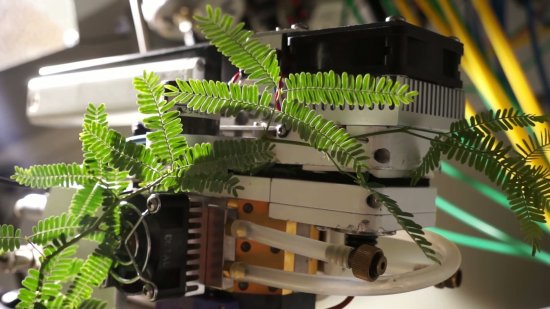
An Ecotron is a device that enables scientists to simulate several climate parameters and control them to study miniature versions of given ecosystems. A team in France decided to study Arizona savannahs. Locked in hermetic climate chambers, they analyse different plants from the savannah after accurately calibrating the surrounding light, the irrigation system, and the composition of the atmosphere. Thanks to the collected data, the team will be able to forecast the ecosystem's reaction to any…

Video
6518
Ecotron: a Climate Simulator
Open media modal

Film for consultation only

Mission Tonga

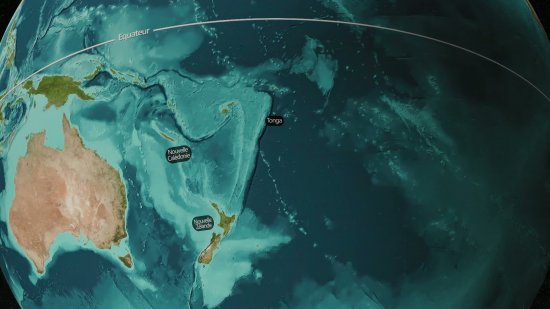
The Tonga mission takes you on board the Atalante, a French oceanographic vessel searching for shallow submarine volcanoes in order to understand and predict the effects of fluid emissions on marine life and the climate. The expedition, led by two researchers, Sophie Bonnet (oceanographer, IRD) and Cécile Guieu (oceanographer, CNRS), is analysing and studying the effects of the addition of trace elements from shallow hydrothermal springs to determine the potential impact on marine productivity…

Video
6981
Mission Tonga
Open media modal
Climate, from yesterday to tomorrow

A video clip produced in conjunction with the publication of Sylvie Joussaume's book "Climat d'hier à demain" at the 2000 Salon du Livre in Paris. Sylvie Joussaume is director of research at the Laboratoire des sciences du climat et de l'environnement (LSCE) in Gif-sur-Yvette. With its accessible style and illustrations which reflect both the current state of the world and the diversity and richness of available climate archives, as well as the most recent results from a rapidly…

Video
1054
Climate, from yesterday to tomorrow
Open media modal

Only available for non-commercial distribution

India: Nature under Pressure

Can human development continue at this pace without causing a loss of biodiversity? A group of researchers at the French Institute of Pondicherry believes so. By studying the impact of human activities on a biological hotspot in the South of India, they hope to find the key to a harmonious coexistence between humans and wildlife.

Video
6464
India: Nature under Pressure

CNRS Images,

Our work is guided by the way scientists question the world around them and we translate their research into images to help people to understand the world better and to awaken their curiosity and wonderment.