Only available for non-commercial distribution

© CNRS - 1949

Reference

485

Magicians of Wanzerbe (The)

The principal secular and sacred rituals of the Sorante magicians in the village of Wanzerbe, Niger.

Duration

00:33:00

Production year

Définition

SD

Color

BW

Sound

Sound

Version(s)

English
French

Original material

16 mm Film

Transcription


The Songhay people say that hawks and vultures flying in the wind will listen to God's secrets to retelling them to the sohantyé magicians. The sohantyé magicians know the secrets of the sky and the secrets of the earth, the secrets of the trees and the secrets of the bush.

All of the most famous sohantyé magicians in the Songhay country are from the village of Wanzerbe. Wanzerbe is about hundred kilometers from the Niger river, and to get there, you take the road that was once the route of invasions. It was through this route that Tuareg raiders and Moroccan conquerors arrived. But today, on this road, you only encounter peaceful merchant caravans, Songhay people, and Tuareg from Gurma who have come to Wanzerbe to buy or sell livestock.

And behind the horses and the camels trots a little girl pulling a restive young goat.

Soon the first trees of Wanzerbe come into view. The horses caracole. Chief Sourgya is welcomed by the notables, who come to greet him. The Iwellemmeden Tuareg chief makes his white camel kneel down.

And Nacio Maiga, the guide with the beautiful embroidered boots, arrives, as usual, last.

Today, Saturday, is market day. The people of Wanzerbe do not like strangers, and none of them greet Nacio Maiga. The Wanzerbe market is held in a talweg that separates two neighborhoods of the village : the faryé neighborhood and the sohantyé neighborhood. Here, in the shade of a tree, all the foodstuffs necessary for daily life are sold: milk, butter, cheese, spices.

If this woman smiles, others are afraid, and hide.

The women potters brought large clay pots from the bush, which are used for cooking and fetching water.

In the sun stands the market .

The Tuareg brought salt from the northern Sahara, salt in slabs, which they cut into small shiny cubes. Cotton is sold by the handful, by the cubit, by the loincloth. And since most of the people of Wanzerbe are unaware of the value of money, it is through exchange that they proceed: a loincloth for a kid goat.

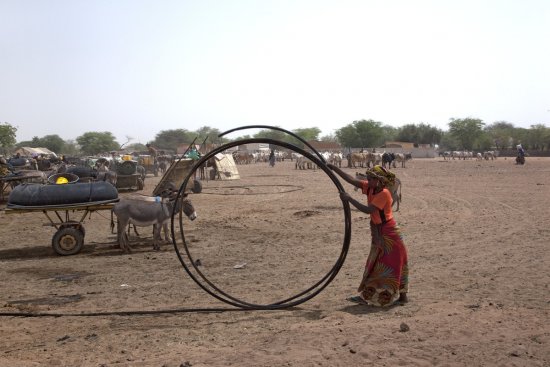
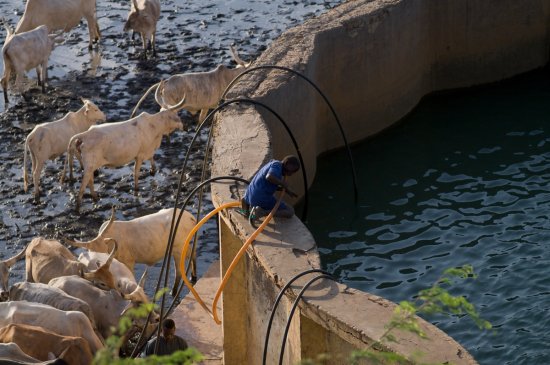
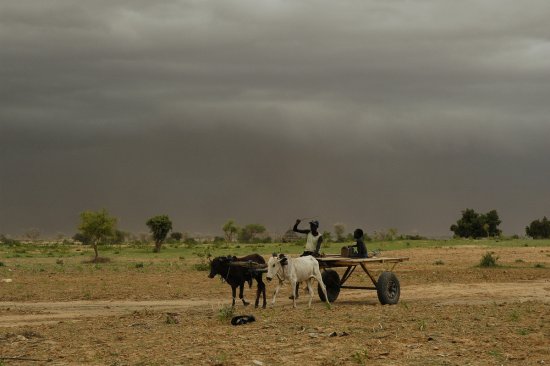
The Bella, captives of the Tuareg, brought the herds of cattle here, and it is these cattle that Sourgya, the chief of the canton, is bargaining for with these Bella, who themselves are riding on oxen.

But the market in Wanzerbe is ephemeral. By noon, everyone is leaving. The Tuareg ride off on their camels; the Bella head into the bush on their oxen; and the people of Wanzerbe return to their homes.

These people from Wanzerbe have come here to stock up on supplies, and the women are preparing food. They pound millet under the smiling gaze of little girls.

The women and these young girls go to fetch water every day when the sun goes down. The village of Wanzerbe is built on the banks of a goru. This is a river that runs dry during the dry season, but wells have been dug in the sandy riverbed, and to avoid endless palavers, each family has its own.

The water table is not very deep; all you need is a gourd tied to the end of a rope to reach it and draw water.

The water, poured into large clay pots, is carried on the shoulder back to the village.

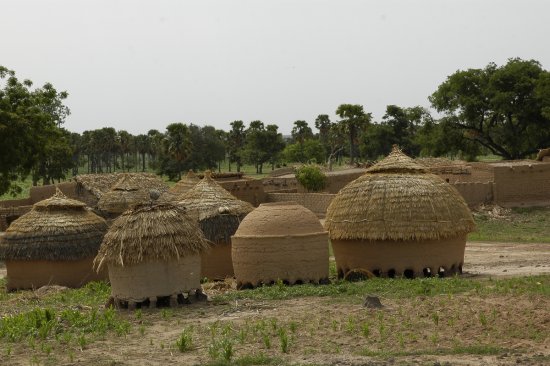
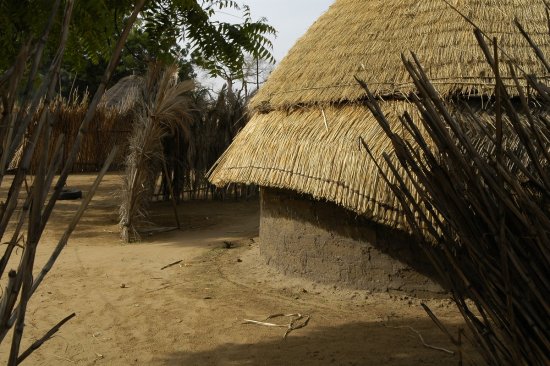
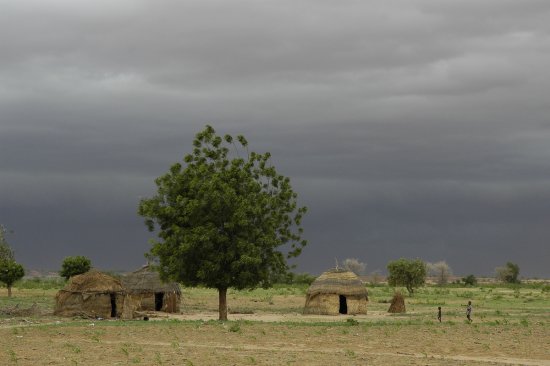
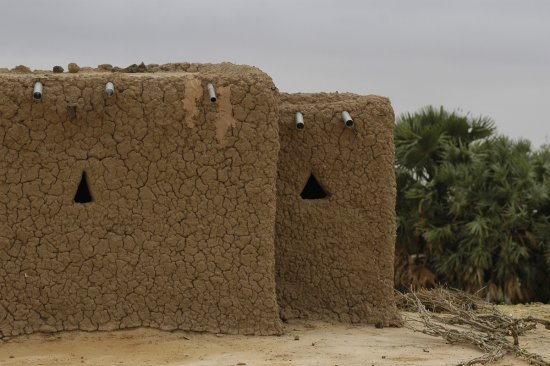
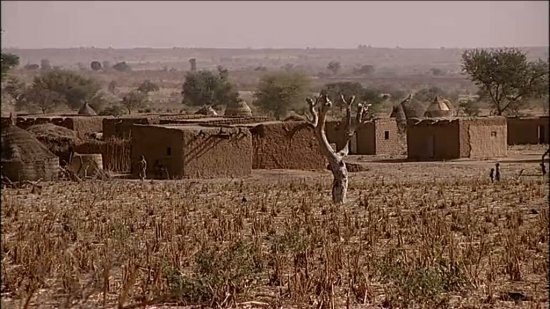
Like all villages in northern Sudan, Wanzerbe is made up of huts with thatched roofs and clay walls. These huts are grouped together into family compounds, and it is the women who are responsible for maintaining them, sweeping and cleaning, helped by the little girls when they don't prefer to play.

As for the young people of Wanzerbe, sitting on a tree trunk, they are playing games of chance.

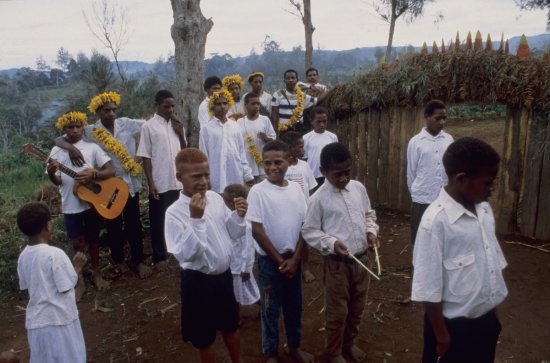
The children will be the first to come. The children of Wanzerbe are grouped into age classes under the supervision of a former leader, and today they have come to show us their games: hopscotch; hopscotch in groups, which is also an excuse for endless jostling; lift-and-carry; balancing; somersaults; the bridge; and dancing.
This game resembles what we call in France the bear game, where children jump successively on a group until that group collapses.
The melee. And the latest addition, the truck game, which kicks up the beautiful dust.
Then these children remember that one day they were circumcised. And, just like on that day, they gather in a circle, and stamp their feet on the ground while singing the song of the circumcised.

The leader of the children, in order to get them to leave, is forced to organize a race to a nearby tree.

That's when the magicians arrived.

This is Mossi, one of the sohantyé magicians of Wanzerbe, coming out of his hut. Mossi will first take us to the eldest of these magicians, an old blind man, who will tell us who these magicians are: the descendants of Si, the founder of the Songhay Empire, who could fly through the sky, transform himself into a vulture, and also transform his horse into a vulture to watch over his vast empire. Today, he is represented by this small silver ring belonging to the magician Bakari.
This is Dyadye and Barake. Old Dyadye is telling Barake how magicians must initiate their young boys: take them into the bush, show them the trees, teach them how to cut the bark from these trees, but also how to protect themselves by tying the bush, how to protect themselves to the north, east, west, and south.

The magician went alone into the bush. He throws down his bag and his stick, and approaches the tree from which he will take the bark. But first, he ties the bush in the direction of the four cardinal points. He greets the tree. He says: "I have come with the knowledge of the village, give me the knowledge of the bush." Then he kneels and makes a symbolic wound in the tree with his machete. He washes it with earth. Thus protected, he can begin to cut the bark of the tree directly, to the north, south, east, and west.

It is this pounded bark that he will use to prepare his magic charms.

Let's follow Mossi inside the hut that serves as his laboratory. Today, he is going to prepare a charm called a hampi kanendi. It is a charm that helps women who are too thin to gain weight. To do this, Mossi will germinate millet seeds on the surface of the water contained in a large clay vase.
The millet will sprout in a day. He will put this millet in a cake, give the women water to drink, and thus they will grow fat. But before continuing, Mossi will protect himself by tying up the bush. He has filled a small calabash with water. He covers it with a light cloth after reciting a spell.

He holds the gourd at arm's length, concentrates for a moment, and when he says the word “kak!”, he tips the gourd over. Not a single drop of water comes out. Mossi drinks the water from the gourd, wetting his arms, hands, and face. He has tied up the bush and can continue his work.

He holds the large clay vase of the hampi kanendi at arm's length. He utters a new magical formula: "Dyadye is before me, Dyadye is behind me, what was good in the mouths of my ancestors must be better in my mouth." And he spits in the direction of the four cardinal points. He spreads a first layer made from powdered kabe tree bark on the surface of the water.
Above, he spreads a second layer, starting with a circle, a magic circle of protection. It is the bark of the faray tree that must cause the millet to sprout in a day. Then, looking at his left hand, he places the millet seeds in small piles, starting from the center.

He finishes with a magic circle, utters a final spell, and spits. All he has to do now is wait for the millet to sprout. And then a customer arrives. For these magicians of Wanzerbe are also diviners. This customer has come to ask Wanzerbe for information about his married life. And Mossi reads this information in the cowrie shells, the seven shells whose respective position provides an answer to the question asked.

Mossi throws the cowrie shells again, but they no longer speak. The client insists. So Mossi reads the earth. He ties up the bush and says: “The earth does not lie.” Then he throws the stars, four series of dots thrown at random, which he counts in pairs and repeats four times in a row. The count is marked at the end of the throw: two parallel lines for even, a single line for odd. Using this count, he traces the geomantic theme on the ground.

It is a complex interpretation of the lines he has just drawn, which provides an answer not only to the question asked, but also to many other questions, because the earth does not lie. Mossi has this power because he is guided by a spirit. Mossi has erected an altar to this spirit in the courtyard of his compound. These are four trees planted in the direction of the four cardinal points. And to compel this spirit to help him, Mossi must sacrifice an animal to him from time to time. From the way the chicken whose throat he cut struggles, from the way the blood flows onto the ground, Mossi knows whether the spirit accepts the sacrifice.

But today, the spirit is not satisfied; he wants more blood. This white goat is also offered in sacrifice at the foot of the altar. Mossi slits its throat and recites the incantation. He soon emerges carrying the two carcasses, which he throws into a corner of his compound. His son undresses to hand him the water for ablution.

This is how the magicians of Wanzerbe work, alone in the bush or in their huts.

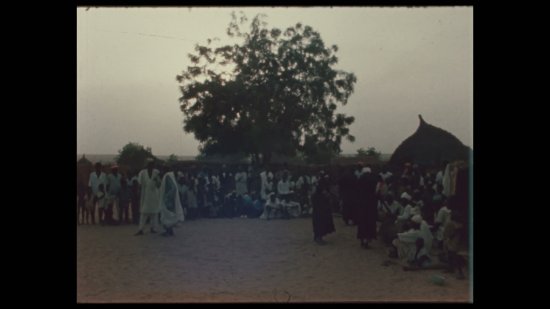
Although the magicians of Wanzerbe always work alone, they sometimes have to gather together. This happens when malevolent forces threaten the village, when soul-eating sorcerers from the bush and magicians from neighboring villages try to spoil the work of the magicians of Wanzerbe. Then a sohantye hori, a dance of the magicians, must be organized. During this dance, only one magician will dance. He will symbolize the entire community, and it is he who will be judged [sic] to drive out evil.

The men return from the bush and head to the village plaza where armpit drums are playing. The women also come. They leave their water duties because they play an important role in these dances.

The little boys came to see how their fathers dance and how, one day, they will dance. Already, the magicians are there, and each time one of them arrives, the drummers chant this praise-poetry: “Son of Si, son of Almine, Si flies in the night, Si flies in the day.”

Here comes the dancer. After making a magic circle with a pinch of earth, he signals to the musicians to approach him.
He holds a saber in his hand, the hilt of which is shaped like a vulture's head, a reminder that his ancestor Si could fly like a vulture. It is with this saber that he will engage in a dubious duel with evil. He will fight it with long vertical and horizontal strokes.

The women break into ululation. The men throw gifts with noble gestures.

After this initial purification, the dance itself will begin. It is to the simple sound of this orchestra, to the simple hearing of these words, that the magician must reach trance. But this task is so difficult that the musicians must surpass themselves, and the chief Sourgya has sought out the best drummer in Wanzerbe. During the break, the magician drinks. After throwing two pinches of earth into the water and before getting up, he picks up another pinch of earth.

The dance is just a simple stomping to the rhythm of the orchestra, to the sound of these voices saying: “Si takes up arms, Si Baru, Si Almine, Si can kill the man between his headdress and his head, Si can kill the man between his shoe and his foot, Si can kill the man between his shirt and his neck.”

When the magician is tired, he signals to his captives to dance in his place. This dance is a dance with sexual symbolism. One woman has hidden a calabash under her skirt; she will represent the woman. Another has hidden a stick under a flap of her loincloth; she will represent the boy.

With sticks, the musicians chase away spectators who have come too close, and the dance goes on. The magician's trance will show itself in two ways: he will tremble, and a small chain will emerge from his mouth, which he has in his stomach and which is his most formidable weapon. But the magician's son cannot resist the sounds of this music and begins to dance too. Soon, the musicians surround the magician. He trembles, and the little chain streams from his mouth, dangling before his face for a few seconds. Evil is driven far from Wanzerbe. But at the sight of this chain, all the magicians are seized with a kind of furor: they tremble, they dance, they cry.

While the magicians of Wanzerbe drive evil from their village in this way, they also have another protector: the genie of the mountain of Sargoumé . He protects the fields and herds, and brings health to the village. But in order for this genie to bestow his favors on the village of Wanzerbe, it is necessary that every year, during the dry season, early one morning, an animal be sacrificed to him.

The young boys are the first to set off for the mountain of Sargoumé. Girls and women are not allowed to attend the ceremony. The young boys walk alone through the bush, through this hostile bush that they do not yet know, passing trees whose names and magical properties they do not know.
Behind them comes the animal that will be sacrificed. This year, it is a white calf. The village chief, surrounded by his brothers and sons, leads the animal to the mountain of Sargoumé, for it is he, the headman, who is responsible for the sacrifice.

When he reaches the foot of the mountain, the chief goes off alone to pray. He says to the genie of Sargoumé: “We have brought you meat, so grant us good health and a good harvest.” Many young boys from Wanzerbe have already gathered, and the dogs have come too, because they know that soon there will be blood.

All the magicians must be present. They introduce themselves to the chief, who assigns them their places. Here comes one, followed by his son, who has already begun his initiation. He greets the chief.

This old man insisted on coming. He leans on the long forked stick that is the insignia of noble elders in the Songhay country. These three are returning from working in the bush.

And here is the dancer. He greets the chief. Some of these magicians came with the spears that their fathers used as weapons, others with the axes they used to cut tree barks, the old man with his forked stick, the leader of the children with a bamboo stick. He is the one who orders the boys to go into the bush to fetch the bundles of wood with which the animal's meat will be burned after the sacrifice. Meanwhile, the magicians discuss among themselves the exact location where the sacrifice should take place.

A place is chosen. The chief gives his approval. One of the magicians faces north, south, east, and west, and draws a cross in the sand. That's where it will be. Straw is brought to light the pyre, and bundles of wood are piled on top of it. Each boy was keen to bring the largest bundle possible to show the men his youthful strength.

Even the smallest children gathered together to carry this enormous log. Everything is ready. The calf is brought in. It is laid on the ground, its head facing east. The assistants hold it down, the priest feels its neck to find the exact spot, and slits its throat. And, so that the blood would flow as widely as possible onto the ground, the severed head is lifted up.

The blood pattern is favorable. The animal's final movements during its death throes are also favorable.

The genie of Sargoumé has accepted the sacrifice. This year will be a good one for the people of Wanzerbe.

And, as the cutting comes to an end and the dogs lick up the blood that has spilled onto the ground, the magicians' faces break into smiles again, for they know that this year, the village of Wanzerbe will once again enjoy good health and good harvests.

An old man approaches the pyre and sets it alight.

The village chief sends the children to fetch the pieces of meat to throw them on the fire where they will simply be roasted.
All the meat must be roasted in this way, as no pieces are allowed to return to the village. Even the skin is cut into strips to be burned.

These pieces of meat are barely grilled when the magicians remove them from the fire and throw them to the children, who fight to eat them.

And soon everything is eaten. The last pieces are buried in a hole dug in the ground. The ceremony of sacrifice to the genie of the mountain of Sargoumé comes to an end. The magicians part ways. Each goes his separate way. The children return to the village and the leader of the children orders them to run home, as is the custom.

And the chief … (31'33)

Director(s)

Jean ROUCH

Production

Scientific topics

CNRS Images,

Our work is guided by the way scientists question the world around them and we translate their research into images to help people to understand the world better and to awaken their curiosity and wonderment.