Only available for non-commercial distribution
© CNRS - 2020
Reference
6963
Inside the mind of a baby
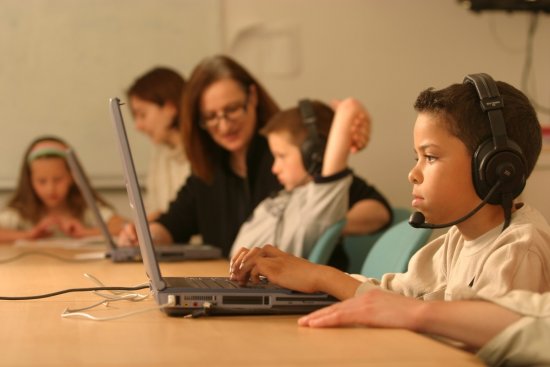
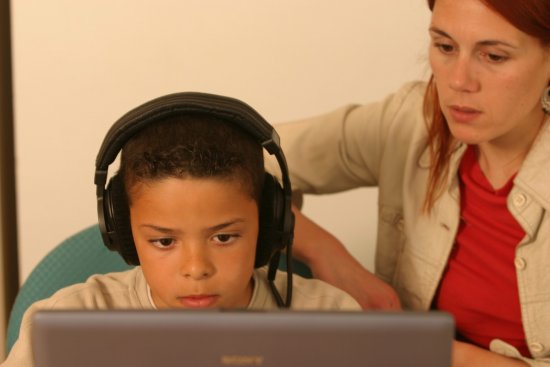
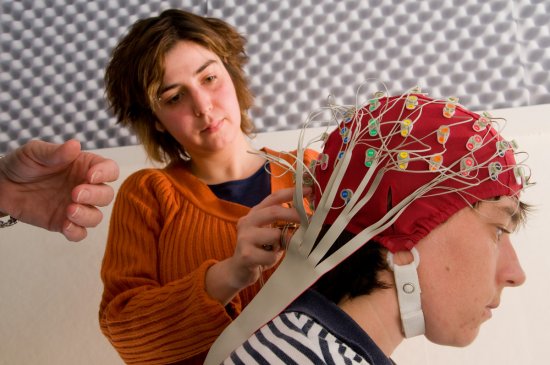
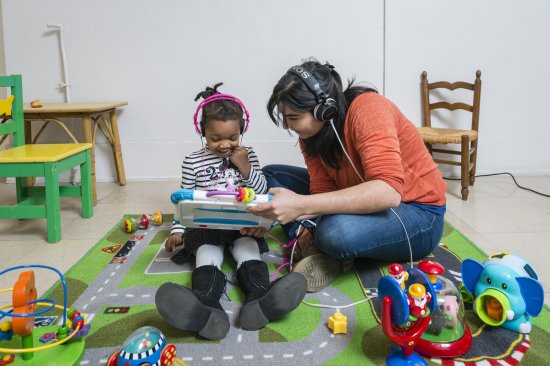
How do babies learn languages? A team of psycholinguists at Babylab is focused on how the structure of sentences is learned, how sounds in language are organised, and the effect on the cognitive development of children based on their social environment. In this film, discover the astonishing experimental protocols used to probe the brains of infants.
Duration
00:06:56
Production year
Définition
HD
Color
Color
Sound
Sound
Version(s)
French
English
International version
Original material
Apple ProRes 422
Add to my selection
Terms of use
The use of media visible on the CNRS Images Platform can be granted on request. Any reproduction or representation is forbidden without prior authorization from CNRS Images (except for resources under Creative Commons license).
No modification of an image may be made without the prior consent of CNRS Images.
No use of an image for advertising purposes or distribution to a third party may be made without the prior agreement of CNRS Images.
For more information, please consult our general conditions
Transcription
OFF 1
00:08
Que se passe-t-il donc dans la tête des bébés ?
Aussi petit soit-ils, les humains dès leur plus jeune âge sont de véritables éponges à information car si les bébés mettent environ un an à se tenir debout, l'apprentissage du langage commence, lui, bien plus tôt.
Mais comment les bébés font-ils pour apprendre une langue ? Et quels sont les facteurs qui leur permettent d'y parvenir ?
Ce matin, Salomé et Énéa, tous deux âgés de 12 mois vont aider les scientifiques à percer ce mystère.
Ils ont rendez-vous au BabyLab de l'École Normale Supérieure à Paris où se rendent chaque année quelques 1000 bébés accompagnés de leurs parents.
Un laboratoire qui étudie la cognition des tout petits, ces processus mentaux liés à l'apprentissage.
Des équipes de psycholinguistiques s'intéressent notamment à l'apprentissage de la structure des phrases, de l'organisation des sons dans le langage, ou encore à l'influence de l'environnement social sur le développement cognitif de l'enfant.
ITV Sho TSUJI, psycholinguiste
01:09
Les enfants apprennent beaucoup
mieux que les intelligences artificielles ils ont besoin de beaucoup moins de données, ils sont très efficace et notre grande question c'est :
pourquoi sont-ils si efficaces ?
Une force des bébés, c'est leur capacité à utiliser leur environnement social, de très bien capter les signaux sociaux, et du coup on essaye vraiment de comprendre comment ils font ça et quels sont les signaux sociaux qui sont très importants pour eux.
OFF 2
01:38
Les conversations des adultes qui entourent les bébés sont un levier déterminant pour leur apprentissage de la langue.Bien avant qu'ils ne commencent à parler, les bébés parviennent à deviner le sens des mots grâce à de précieux indices comme leur place dans les phrases.
Pour le vérifier, Mireille Babineau a imaginé une expérience.
Elle va faire écouter à Salomé deux listes de phrases qui comportent des verbes et des noms familiers.
La première liste est grammaticalement correcte tandis que l'autre ne l'est pas.
En observant les réactions de Salomé à l'aide d'une caméra, elle peut mesurer son temps d'attention en fonction des phrases énoncées.
Comme une trentaine d'autres bébés avant elle Salomé fait preuve d'une attention accrue à l'écoute des phrases grammaticalement correctes.
Bien qu'elle soit encore incapable de prononcer les mots utilisés.
ITB Mireille BABINEAU, psycholinguiste
02:26
La première année de vie, c'est la découverte des sons. Les enfants vont babiller, vont produire des sons mais pas nécessairement leurs premiers mots.
Et donc c'est sûr que on ne s'imaginait que à ce stade là ils ne pourraient pas comprendre certains principes de base de la syntaxe, de la langue, ou ils ne pourraient pas comprendre le sens vraiment de beaucoup de mots.
Mais en fait on s'est trompé parce qu'ils apprennent tout en parallèle :
les sons de la langue, le sens des mots, et aussi la syntaxe, donc comment on ordonne et les liens entre ces mots là. Parce-que tout est donné en même temps. Quand on s'adresse à un enfant, on va utiliser des phrases complètes donc c'est sûr qu'ils vont absorber le contexte syntaxique et qu'ils vont y prêter attention.
Et cette attention au contexte va faciliter l'apprentissage de nouveaux mots parce qu'ils vont avoir trouvé un indice qui est très important, qui est très utile pour deviner le sens de nouveaux mots.
OFF 3
03:19
Si l'interaction avec d'autres humains semble être l'une des clés de l'apprentissage, les bébés d'aujourd'hui évoluent dans un environnement
de plus en plus façonné par les écrans.
Des outils numériques dont les effets sur l'enfant peuvent être néfastes
dans certains cas mais qui, bien utilisés, peuvent aussi participer à l'apprentissage.
Comment adapter ces outils numériques aux bébés ?
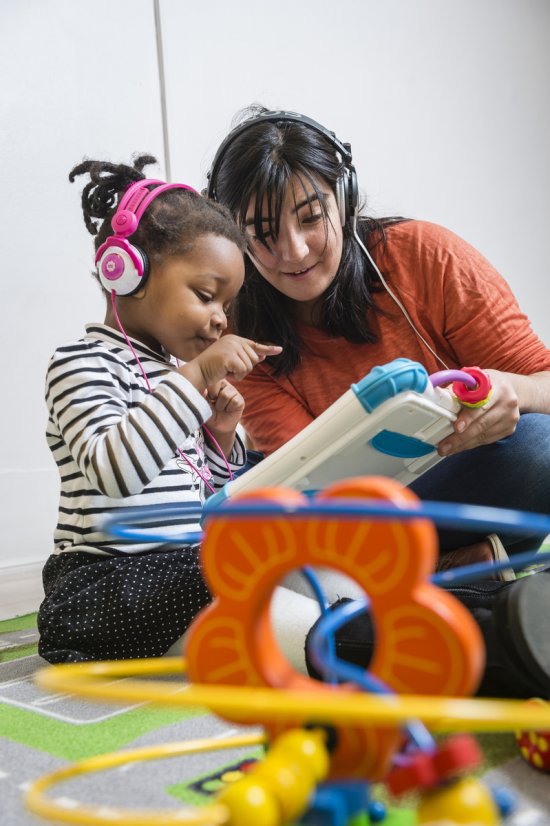
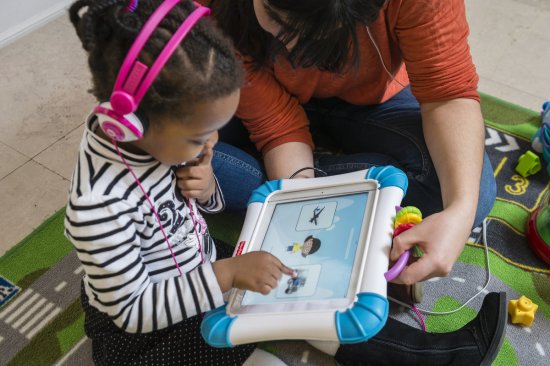
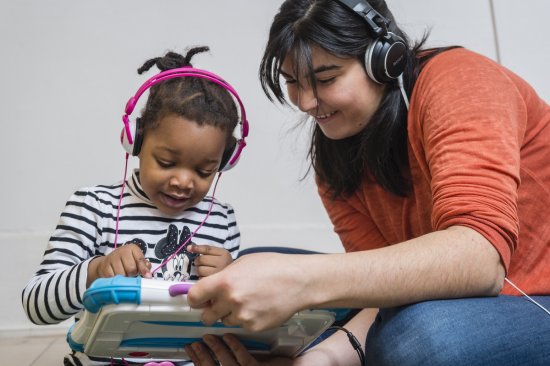
Le petit Énéa, habituellement très peu exposé aux écrans, va aider à le découvrir...
Ce repère autocollant placé sur son front va permettre à Sho Tsui et à Cécile Crimon de suivre les mouvements de la pupille d'Énéa en temps réel, grâce à un occulomètre.
Le petit garçon va devoir relever un défi. Est-il capable d'apprendre un nouveau mot en seulement quelques minutes ? Pour le savoir il est exposé à un écran sur lequel évolue un ours animé interactif. Le mouvement de ses yeux suit les déplacements de ceux de l'enfant.
Les yeux de l'ours vont également pointer différents objets et les associer à des mots.
ITV Cécile CRIMON, psycholinguiste
04:17
On a testé l'an dernier une cinquantaine d'enfants autour de 12 mois
et c'est ce qu'on a vu c'est qu'ils arrivait à faire l'association entre ce nouvel objet présenté qu'ils n'avaient jamais vu avant, et ce nouveau mot qu'on leur a présenté aussi en association avec ce nouvel objet, qu'ils n'avais jamais entendu avant - ça on le sait parce qu'on les a inventés.
Donc là ce qui nous reste à faire, en testant un autre groupe d'enfants,
c'est de voir si c'est cette interactivité là qui a été un élément clé
dans le fait qu'ils aient réussi à apprendre ce mot nouveau là ou pas.
Donc c'est quelque chose qu'on veut encore bien distinguer.
OFF 3
04:53
À la différence d'un écran passif, le programme auquel Énéa a été confronté s'appuie sur la notion de contingence temporelle.
L'ours se déplace à une vitesse adaptée au regard de l'enfant ce qui capte son attention comme le ferait un adulte. Même si naturellement le bébé réagit plus positivement à l'image d'un être humain pour apprendre un mot, ce dispositif pourrait permettre d'imaginer demain des programmes à l'interactivité adaptée aux tout petits, en remplacement des écrans passifs.
ITV Sho TSUJI, psycholinguiste
05:22
Au BabyLab, ici, il y a beaucoup de parents qui posent la même question :
est-ce que les écrans sont mauvais ou biens pour les enfants ?
Et j'ai trouvé qu'en fait, il n'y a pas encore beaucoup de réponses à ça.
Et c'est une motivation pour moi pour monter ce programme. Oui, je crois que savoir si l'interactivité est un élément important, c'est important pour avoir un point de départ, pour développer ces sortes d'applications.
Après, il faut bien-sûr être très vigilants et il faut vraiment vérifier
si un programme marche vraiment ou non. C'est vraiment pourquoi on fait de la recherche, pour vraiment comprendre ce qui peut marcher ou non.
OFF 4
06:06
Ces découvertes ne doivent pas, pour autant, nous pousser à nous adresser à un bébé comme à un adulte. Ni à sacrifier ces moments d'échange pour la contemplation d'un écran. Les intonations un peu exagérées que nous utilisons instinctivement vont capter leur attention et les aider à trouver leur chemin dans l'immense labyrinthe de la langue.
Un sourire ou un regard permettent aussi aux bébés d'associer l'apprentissage à l'émotion.
Un parcours vers le savoir qui ne cessera de se poursuivre tout au long de leur vie...